




Boards


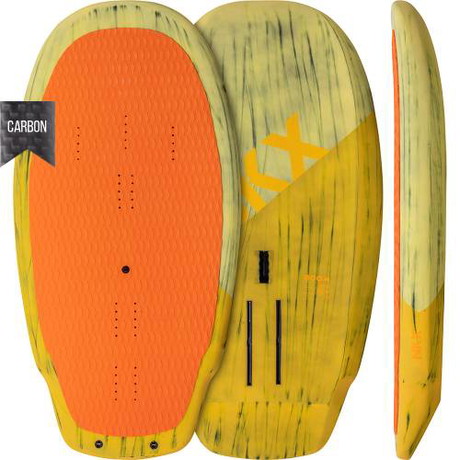


Boards for Wing Surfing Skill Levels and Styles
Wing surf boards are short, compact boards designed to work with both a foil and a wing, allowing you to take off quickly and maintain control on the water. Wing surf boards cover beginners, intermediates, and advanced riders who want to optimise balance, take-off, and manoeuvrability. The right board shortens the learning curve, helps you stay stable at low speed, and ensures safe progression as you move from your first rides to jumps, carving, and wave riding.
Beginners often focus on stability and easy take-off in light to moderate wind, while more experienced riders look for responsiveness, low weight, and precision for carving, freestyle, and stronger wind. The choice of board determines how comfortable you are in choppy water, how early you lift onto the foil, and how playful the setup feels.
Types of Wing Surf Boards and Their Advantages
All-round boards have medium length and volume, good width, and a forgiving bottom shape, making them ideal for most conditions and for riders who want to combine cruising, small jumps, and light wave sessions. They lift relatively early, work well with different foil sizes, and provide steady control while your technique is still developing.
Wave boards are typically shorter with more compact volume and rounder rails, offering quick response and a more direct feel through turns and on wave faces. Light wind boards have higher volume and a larger surface area to help you onto the foil in weak wind and make balancing easier, while high-performance boards tend to be narrower and stiffer, with lower volume relative to weight, giving advanced riders maximum responsiveness, speed, and pop for freestyle.
How to Choose Wing Surf Boards by Skill Level and Conditions
Your choice should be based on experience, body weight, typical wind conditions, and the discipline you want to focus on. As a rule of thumb, higher volume in litres provides more stability and an easier take-off, while shorter length makes the board more lively and technical. Width and foil compatibility are crucial for both comfort and safety.
- Skill level: Beginners should choose a board with plenty of volume and a wide platform, while experienced riders can size down for more manoeuvrability.
- Weight: The greater your body weight, the more volume and surface area the board needs to keep you stable on the water before take-off.
- Volume: A high litre volume makes water starts and balance easier, especially in light wind and choppy conditions.
- Length and width: Longer and wider boards forgive foot placement errors, while shorter and narrower boards respond faster and demand more precision.
- Foil box and positioning: Ensure a compatible foil mount and adjustable track so you can fine-tune the balance point and lift.
- Spots and wind: Consider whether you usually ride in low or high wind strengths, flat water or waves, and choose shape and volume accordingly.
If you want to progress quickly, it can be beneficial to choose a board that slightly challenges you in size but still gives confidence for water starts and your first jibes.
Stability, Construction, and Durability of Wing Surf Boards
Stability is closely linked to volume, width, and stiffness. A board with a wide midsection and sufficient volume sits more calmly in choppy water and offers better control at low speeds, while a stiff construction ensures that power from the wing and foil transfers directly, both in jumps and tight turns.
Modern boards are typically built from composite materials around a foam core, often reinforced around the foil box, rails, and landing zones to withstand hard impacts. A good deck pad provides secure footing and reduces foot fatigue, and strap options can be advantageous for freestyle and strong wind. To get a board that lasts for several seasons, it’s important to choose a construction that matches your level and usage, so it’s not overstressed during jumps or unnecessarily heavy for your conditions.
Find Your Next Wing Surf Board Setup
When comparing models, it’s a good idea to check volume, length, width, recommended rider weight, and the type of foils the board is designed for. This helps you quickly narrow down the sizes suited to your weight, skill level, and the spots you ride most often.
Use filters for skill level, volume, and size to refine your selection, and pay attention to details such as deck pad, foil box, and strap options. That way, you’ll more easily find a setup that matches your style, local conditions, and budget.