




Waterproof Bags
 64%Annox Trailguard 23.5L - Waterproof Outdoor Backpack With Laptop Compartment (15.6”)Special Price £32.95 Regular Price £89.9523.5 L




Waterproof bags for kitesurfing, SUP and everyday use
Waterproof bags protect dry clothes, electronics and equipment when you are near or directly in the water. Waterproof bags are ideal for kitesurfers, SUP riders, beachgoers and commuters who want to ensure their belongings stay dry. From your first kite session to long downwind SUP trips, a fully sealed bag lets you relax knowing your gear is safe.
A bag labelled waterproof is designed to withstand direct contact with water and, in many cases, brief submersion, whereas water resistant mainly protects against rain and splashes. The IP rating indicates how well the closure protects against dust and water, helping you determine whether a bag can handle rain, spray or actual submersion.
Types of waterproof bags and how to choose the right one
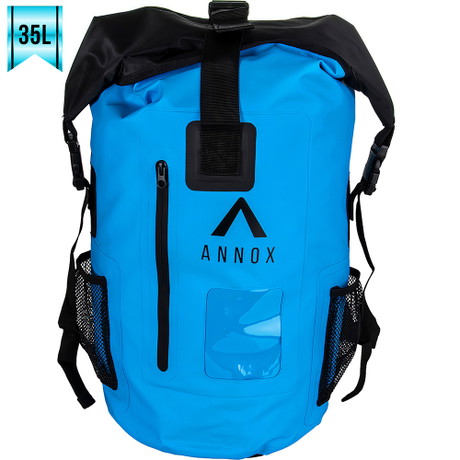
Dry bags are simple cylindrical pouches with a roll-top closure, perfect for keeping dry gear together when kitesurfing or paddleboarding, or for keeping keys, towels and spare clothes dry at the beach. Waterproof backpacks combine the same level of protection with padded straps and back panels, allowing you to cycle to your spot, walk longer distances and use the bag for study or work.
Waterproof duffel bags provide better organisation and room for wetsuits, harnesses and pumps while keeping your car or public transport free from salty water and sand. Small waterproof cases and sleeves protect your phone, car keys and wallet and can easily fit inside a larger bag or be secured to the deck of a SUP board.
- Dry bag: Lightweight, compact and ideal as an inner liner in larger bags or strapped to a SUP.
- Waterproof backpack: Practical for travelling to and from your spot and suitable for everyday commuting.
- Waterproof duffel: Great for travel, road trips and weekend adventures with plenty of wet gear.
- Waterproof cases: Designed for small essentials and electronics that need extra protection.
Start by considering your use scenario. For a typical kite day, a duffel of around 60 to 90 litres provides space for a wetsuit, harness and spare clothes, possibly paired with a smaller dry bag for your phone and keys. For SUP or kayaking, a backpack or dry bag of 20 to 35 litres works well for spare clothes, a wind jacket, snacks and safety gear.
The volume in litres determines whether you’ll primarily have room for small items or a full set of neoprene and layered clothing. Materials such as heavy-duty PVC or coated nylon offer high durability and resistance to saltwater, while welded seams and sturdy buckles reduce the risk of leaks. The carrying system matters if you walk or cycle long distances, as padding, chest and hip straps add comfort.
Also consider organisation. Simple dry bags usually have one large compartment, while backpacks and duffels may include inner pockets, mesh and small compartments for electronics. For commuting, it’s useful to have a padded laptop section and a small waterproof pocket for keys and cards, so you don’t have to rummage through one large wet compartment for small items. A well-chosen option will match both your clothing and equipment.
Use, safety and maintenance of waterproof bags
To achieve a watertight roll-top seal, roll the top at least three times before fastening the buckles together. On a SUP, secure the bag to deck webbing or D-rings so it doesn’t shift if you fall in or take on waves over the deck. Be mindful of weight distribution when packing to maintain good balance and avoid too much weight on one side.
Visibility through bright colours or reflective details makes it easier to be seen in grey weather or early morning and late evening. After use in saltwater, rinse the bag in fresh water, open and close the zips a few times, and let it dry completely before storage. Sensitive electronics benefit from an extra layer of protection in a smaller pouch or inner bag if the bag will be used in demanding conditions or could be fully submerged.