




Helmets


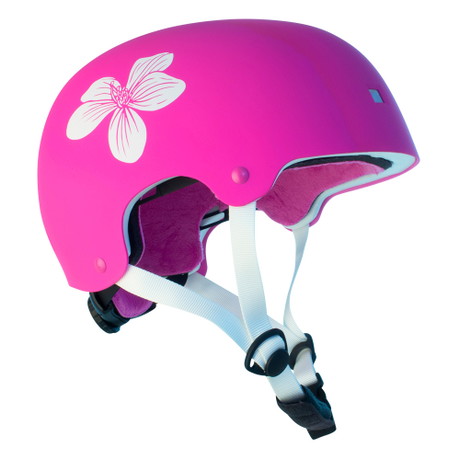


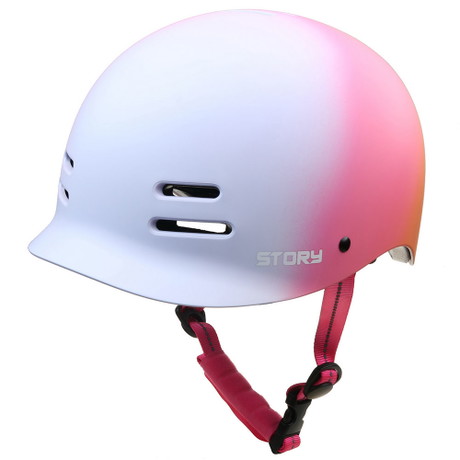


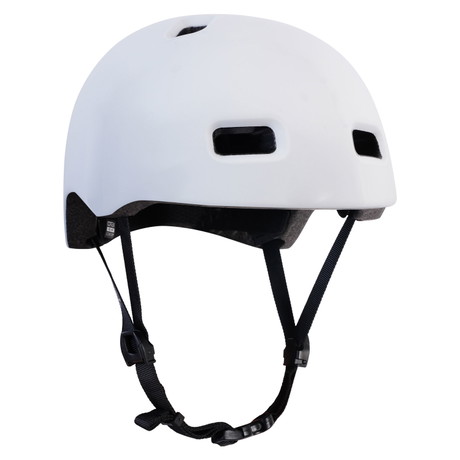


Helmets for Skateboards, Scooters and Roller Skates
Helmets, protection and boards cover skate helmets developed to handle impacts and falls typically associated with skateboarding, scooters, roller skates and other roller sports. A skate helmet extends further down the back of the neck and around the sides of the head than a regular bicycle helmet and is designed to withstand repeated minor impacts and scrapes. The category is relevant for children, teenagers and adults alike — from beginner scooter riders to experienced skaters in bowl and street environments.
The purpose is to provide consistent protection during trick attempts, curbs, rails and hard ramps, where speed, rotational falls and impacts with concrete or metal place extra demands on the shell, foam and fit.
Types of Helmets and Materials for Roller Sports
Bowl helmets and other classic skate helmets have the characteristic round shape with a low profile and extended coverage around the back of the head. They are well suited for park, bowl and vert skating, where falls often happen backwards or to the sides. Street and park-oriented models may offer slightly better ventilation and lower weight while still maintaining a solid shell construction.
Hardshell helmets feature a durable outer shell made from hard plastic that can withstand numerous small impacts and scratches without losing shape. They are popular for intensive use and in skateparks, where the helmet often comes into contact with surfaces or coping. In-mould helmets fuse the foam and shell together, providing lower weight and often better ventilation, but typically a bit less resistance to cosmetic wear.
Internally, EPS foam is mostly used, designed to absorb a significant impact by permanently deforming. Some helmets combine EPS with EPP foam, which can handle several smaller hits without becoming compressed flat. Ventilation holes, inner padding and overall stiffness affect comfort, breathability and how securely the helmet stays in place during rapid head movements.
How to Choose the Right Helmet Size, Fit and Certification
Start by measuring your head circumference horizontally around your head, approximately 1 cm above the eyebrows, using a tape measure. Compare the measurement in centimetres with the size guide and choose a size where the helmet can be tightened or loosened without reaching its limit. The helmet should sit low on the forehead so that the front edge lies about 1–2 cm above the eyebrows without pushing against glasses.
Adjust the straps so the Y-split around the ears sits closely, and the chin strap is tight enough that the helmet cannot be pulled backwards or up on the forehead, but without pinching. Inner pads can often be replaced with thicker or thinner versions, allowing you to fine-tune the fit for a rounder or more oval head shape.
When comparing models, it can be helpful to focus on a few key selection factors:
- Fit: Should sit securely without tilting when you shake your head, and without pressure points at the temples or back of the head.
- Certification: Choose a model tested for roller sports so that the foam and shell are designed for the types of impacts typical of skateboarding, scooters and roller skating.
- Use scenario: Consider whether the helmet will mainly be used in the skatepark, for commuting or for both, as this affects ventilation, weight and durability requirements.
- Comfort: Padding, moisture management and adjustment options are crucial if you ride for long sessions or in warm weather.
- Weight: A lighter helmet can feel less tiring, especially for children and for tricks involving many rotations.
- Age: Children grow quickly, so adjustable systems and extra pad kits can be advantageous, while adults often prefer a more precise fixed size.
A correctly adjusted helmet should remain in the same position even when you unfasten the chin strap. If it slides easily up or down, the size or pad thickness should be adjusted.
Safe Use of Helmets, Maintenance and When to Replace Them
In skateparks, on the streets and during everyday use, the helmet should always be fastened so the strap cannot slip over the chin. The front edge should not be pushed up on the forehead or backwards on the head, as this reduces protection in face-area impacts. Try mimicking fall movements by nodding and shaking your head to ensure the helmet does not rotate or tip.
After use, the helmet should be stored dry at room temperature, away from direct sunlight and strong heat sources that could weaken the plastic and foam. Wipe the outer shell and inner surface with a damp cloth and mild soap, and allow it to air dry. Avoid solvents, as they can degrade the foam.
Regularly inspect straps, buckles and inner foam for cracks, wear or flat spots. If the helmet has sustained a hard impact where the foam may be compressed, it should be replaced even if the outer shell appears intact. As a general rule, it is also sensible to replace it after several years of frequent use, as materials gradually degrade. The next step is to choose a model that matches your skill level and discipline — and wear it consistently every time you ride.