




Kayak Paddles



Find the right paddle for your kayaking trip
Paddles for kayaking are all about finding one that suits your body, your kayak, and your paddling style. The right paddle makes a big difference when it comes to speed, comfort, and how quickly your upper body tires. Here you’ll find selected kayak paddles designed for efficient propulsion and good ergonomics, whether you’re paddling short leisure trips or longer outings with gear.
When choosing a paddle, pay particular attention to the length, shaft type, and blade shape. A paddle that matches your height, the width of your kayak, and your paddling technique offers better control on the water and reduces the risk of strain injuries.
Choosing length, fit, and materials
The length of a paddle mainly depends on your height and your kayak’s width. As a rule of thumb, shorter paddlers and narrower kayaks require shorter paddles, while taller paddlers and wider kayaks often benefit from slightly longer models.
Here are some key factors worth considering:
- Length: Typically around 200–230 cm for sea and touring kayaks. A shorter paddle offers quicker, more active strokes, while a longer one provides a more relaxed and stable motion.
- Shaft (straight or bent): A straight shaft is simple and lightweight, whereas a bent ergonomic shaft can relieve pressure on the wrists and offer a more natural grip.
- Shaft material: Aluminium is durable and affordable, while fibreglass and carbon are lighter and more responsive—an advantage on longer trips.
- Blade material: Plastic is tough and forgiving, while fibreglass and carbon provide a sharper catch and lower weight.
- Blade size and shape: Larger blades deliver more powerful strokes but require greater strength, while smaller blades are gentler and ideal for covering long distances.
Comfort is especially noticeable in your hands, shoulders, and back. A thinner shaft can suit smaller hands better, and a lightweight material reduces fatigue—particularly useful if you paddle for several hours at a time.
Skill level, use scenarios, and practical considerations
For beginners, a simple, robust paddle is often a good choice. The focus here is on forgiving materials and movements that are easy to learn. Experienced paddlers usually go for lighter, stiffer paddles that transfer power efficiently and provide more precise strokes.
Also consider how and where you mainly use your kayak. For calm lakes and leisurely trips, comfort and easy handling are most important. On longer sea trips with waves and wind, a stiffer paddle with an efficient blade provides better acceleration and control in crosswinds. For daily training, a lightweight shaft and a blade size suited to your strength can make it much more enjoyable to maintain your cadence.
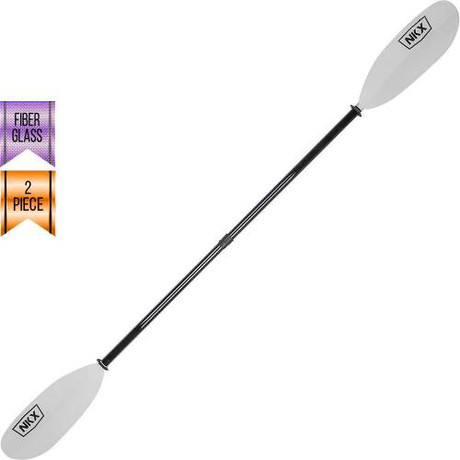
Practically speaking, it’s worth considering a two-piece or multi-piece construction, making the paddle easier to transport and store. Adjustable feathering between the blades can also be an advantage if several people share the same paddle or if you want to experiment with your paddling technique. Choose the paddle that matches your skill level and trip type, and every outing on the water will feel more efficient and comfortable.