












Protection
Skateboard protection – safety that gives you confidence to push further
Skateboard protection is your most important companion when you want to learn new tricks, ride faster, or simply feel secure at the skatepark. Here you’ll find a wide range of helmets, knee, elbow, and wrist guards for children, teenagers, and adults alike, whether you’re cruising, riding bowls, or skating street.
Good protection makes falls less severe, reduces the risk of fractures and scrapes, and provides peace of mind. With the right gear, you can focus on skating – not on what might happen if you fall off your board.
How to choose the right skateboard protection
When choosing skateboard protection, it’s all about fit, protection level, and comfort. Protection that doesn’t fit properly often ends up in the bag instead of on your body, so it’s worth measuring yourself and checking the size guides.
Start by measuring the circumference of your head for the helmet (in cm just above the ears) and checking the manufacturer’s chart. Knees, elbows, and wrists should be protected by snug but not overly tight pads. They shouldn’t slide around when you move or bend your joints.
Key factors to consider when comparing products:
- Size and fit: Measured in centimetres, often shown as S/M/L, and should be secure without feeling uncomfortably tight.
- Certification: Look for approvals for skate/BMX use that guarantee a proven level of protection.
- Materials: Hard plastic shells combined with foam, neoprene, or mesh offer both shock absorption and comfort.
- Closures and adjustment: Wide Velcro straps, elastic, and buckle fastenings make it easier to achieve a stable and personalised fit.
- Ventilation: Especially important for helmets. Vent holes and breathable fabrics help reduce sweat and irritation.
- User level and style: The more aggressive the skating and higher the drops, the more robust and covering the protection should be.
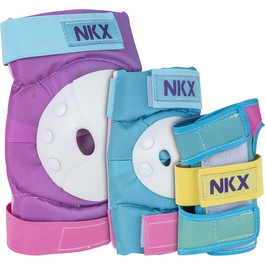
For children, it can be beneficial to choose a protection set with knee, elbow, and wrist guards combined, ensuring everything fits together. For more advanced skaters who know exactly what they’re doing, it can be worth upgrading individual parts to more durable or specialised models.
Types of skateboard protection and their differences
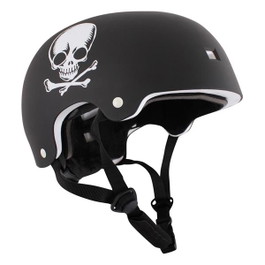
The classic skateboard helmet has a rounded bowl shape that protects the sides, front, and back of the head. It differs from cycling helmets by offering more coverage and typically a thicker shell and foam to withstand repeated impacts. Many models are certified for both skate and bike use, but always check the certification if you plan to use it across sports. A good helmet is therefore a must for all skill levels.
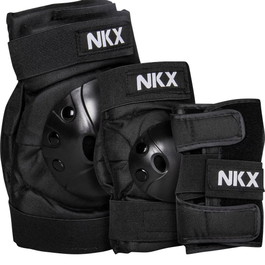
Knee pads and elbow pads come in compact park models with hard shells and heavy padding and in more flexible street versions with a lower profile. Park models are ideal for ramps, bowls, and higher speeds where your knees often make contact with the surface. The slimmer protectors are great for cruising and street skating, where freedom of movement and low bulk under clothing are key.
Wrist guards are especially important for beginners and children, as many falls end with the hands hitting the ground. The splint inside the guard provides support and distributes pressure to reduce the risk of sprains and fractures. Some also choose hip and tailbone protection, particularly for park and vert skating, where backward falls can be tough.
The quality of materials greatly affects both durability and comfort. Thick plastic shells and abrasion-resistant outer layers withstand repeated falls on rough asphalt and concrete, while soft foam, neoprene, and elastic fabrics against the skin ensure the pads don’t rub or dig in, even during longer sessions.
Skill level, usage scenarios, and maintenance
The need for protection changes with experience and skating style. Beginners and children should always wear a helmet, knee, elbow, and wrist protection, both on the street and in the skatepark. It’s about building good habits and avoiding injuries that could diminish their enthusiasm.
Intermediate skaters who mostly skate street and flatground often go with at least a helmet and knee pads, adding elbow and wrist guards when trying new tricks or skating tough spots. Advanced and aggressive park or bowl skaters typically wear a sturdy helmet and heavy-duty knee pads capable of handling slides and big drops, often combined with elbow protection as falls can be more intense.
Also consider where and how you skate:
- Cruising and commuting: Helmet at a minimum, lightweight pads recommended, especially at higher speeds.
- Skatepark and ramps: Full set of protection with strong, durable models.
- Street and technical tricks: Helmet and flexible pads that don’t restrict movement.
- Mixed use (skate, bike, scooter): Look for versatile products with the relevant certifications.
To extend the lifespan of your protection gear, air it out and dry it after each session, especially if you sweat a lot. Soft parts can often be hand-washed in lukewarm water, while hard shells just need wiping down. Replace your helmet if it has taken a hard impact or if the foam and straps show wear. Protection’s most important job is to work when you need it the most.
The next step is to choose the helmets and pads that match your level, style, and body – then you’re ready to progress on your board with much greater confidence.